
 Brian Dương
#Understanding the Difference Between Raw Cashew Nuts and Cashew Kernels: A Complete Guide
Understanding the Difference Between Raw Cashew Nuts and Cashew Kernels: A Complete Guide
07/08/2025 -
Nội dung bài viết
- 1. What Are Raw Cashew Nuts (RCN)?
- 2. Nut Count: A Quality Indicator in RCN
- 3. Are Raw Cashew Nuts Safe to Eat?
- 4. What Are Cashew Kernels?
- 5. Raw Cashew Nuts vs. Cashew Kernels: The Key Differences
- 6. How Cashew Nuts Are Processed: From Farm to Finished Product
- 7. Why Are Cashew Kernels So Expensive?
- 8. Cashew Kernel Grades in Vietnam
- 9. Vietnam’s Cashew Industry and Its Global Role
- 10. Final Thoughts: Why This Distinction Matters
Cashew nuts are enjoyed all around the world for their creamy taste and crunchy texture. But did you know there’s a big difference between raw cashew nuts and cashew kernels? Many people mistakenly use the terms interchangeably, even though they refer to two completely different stages of the cashew nut’s journey—from tree to table.
In this article, we’ll walk you through the clear distinction between raw cashew nuts (often called RCN) and cashew kernels. We’ll explain why this matters, especially in the context of Vietnam’s global cashew industry, and give you insights into how cashew nuts go from fruit to one of the most valuable nuts on the market.
What Are Raw Cashew Nuts (RCN)?
Raw cashew nuts—commonly referred to as RCN—are the form in which cashew nuts are harvested from the cashew apple. Each cashew apple contains a single nut, and these nuts are encased in a hard outer shell that contains a toxic compound called urushiol (the same chemical found in poison ivy).
Because of this toxicity, raw cashew nuts are not safe to eat until they go through an extensive processing procedure.
A raw cashew nut typically contains:
-
About 30% cashew kernel (the edible part)
-
Around 70% shell and outer skin (called testa)
This means if you harvest 1 ton of raw cashew nuts, only 250–300 kg of edible kernels can be extracted. The rest becomes shell waste.
Nut Count: A Quality Indicator in RCN
One important term used in the cashew industry is nut count. This refers to the number of nuts per kilogram of raw cashew and is a way to estimate the quality and potential yield of kernels.
-
A lower nut count (like 170–180 nuts/kg) means larger nuts, which are typically more valuable.
-
A higher nut count (like 210–230 nuts/kg) means smaller nuts, which may produce lower-grade kernels.
In Vietnam, most raw cashew nuts have a nut count between 180 and 210, depending on the region and harvest conditions. This figure is critical in grading, pricing, and forecasting output for both domestic use and export.
Are Raw Cashew Nuts Safe to Eat?
The short answer is no. Raw cashew nuts should never be eaten in their natural state. The outer shell contains urushiol, a toxic oil that can cause severe skin irritation and, if ingested, serious health problems.
Before cashew nuts can be consumed, they must be:
-
Steamed to neutralize the toxins
-
Shelled and peeled carefully to remove all traces of urushiol
This safety requirement is why all cashew products in stores, even those labeled “raw,” have already been through some level of heat treatment and processing.
What Are Cashew Kernels?
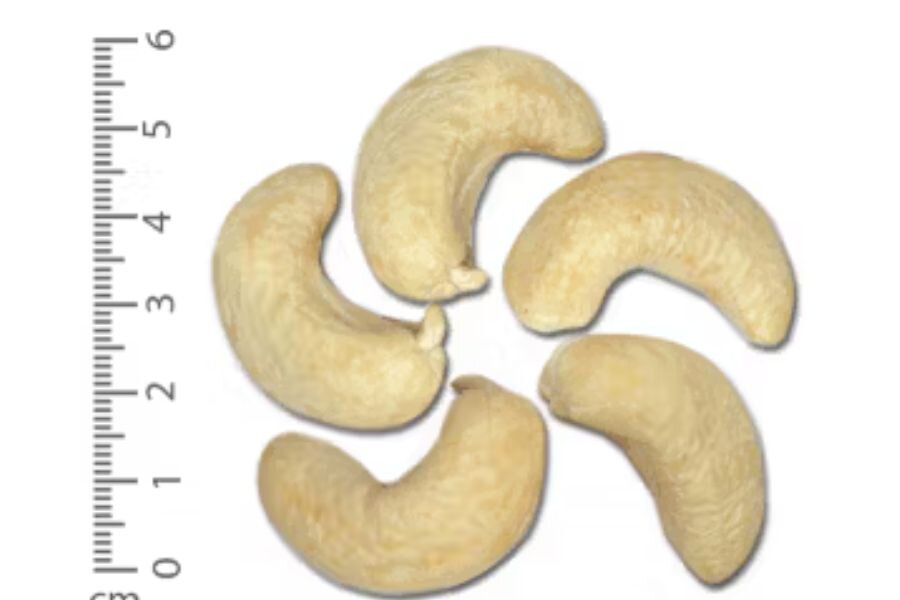
Cashew kernels are the edible part of the cashew nut that has been extracted after full processing. These are the nuts we commonly buy in supermarkets or eat in dishes.
To reach this final, consumable form, cashew nuts go through multiple steps, including:
-
Steaming
-
Shell removal
-
Drying
-
Peeling the thin inner skin
-
Sorting and grading
-
Packaging and vacuum sealing
The result is the smooth, ivory-colored nut we’re all familiar with—ready to be eaten as a snack, used in baking, or made into products like cashew butter, cashew milk, or vegan cheeses.
Vietnam is a global leader in producing these cashew kernels, especially known for high-quality grades like W320 and W240.
Raw Cashew Nuts vs. Cashew Kernels: The Key Differences
Although both terms are part of the same food chain, raw cashew nuts and cashew kernels are very different in terms of:
Form
-
Raw cashew nuts still have their hard outer shell and are inedible in their natural state.
-
Cashew kernels are the clean, edible portion inside the shell.
Processing
-
Raw cashew nuts need to be steamed, shelled, dried, and peeled.
-
Cashew kernels are further graded and inspected for size, color, and quality.
Safety
-
Raw cashew nuts are toxic if not processed correctly.
-
Cashew kernels are safe to eat, having gone through detoxification.
Market Value
-
Raw cashew nuts are agricultural commodities sold mainly to processors.
-
Cashew kernels are finished goods ready for consumer or industrial use and hold much higher value.
How Cashew Nuts Are Processed: From Farm to Finished Product
The journey from raw cashew nut to cashew kernel is long and detailed. There are around 12 steps involved in processing cashews:
-
Collecting cashew apples once they fall naturally from the tree.
-
Separating the nut from the apple.
-
Sun-drying the raw nuts to reduce moisture content.
-
Storing dried nuts in well-ventilated bags.
-
Steaming the raw nuts to loosen the shell and neutralize toxins.
-
Cutting the shell to extract the kernel inside.
-
Drying the extracted kernels again.
-
Peeling the thin, brown testa layer off the kernel.
-
Grading the kernels by size, appearance, and quality.
-
Detecting contaminants using metal detectors.
-
Vacuum-packing for long-term freshness.
-
Fumigation before export to meet international standards.
Each step must be done carefully to maintain food safety, flavor, and appearance. This labor-intensive process is part of why cashew kernels are considered a premium nut in global markets.
Why Are Cashew Kernels So Expensive?
Cashew kernels are one of the most expensive nuts worldwide—and for good reasons:
-
High international demand, especially in health-conscious markets.
-
Limited areas of cultivation—mainly in Vietnam, India, and parts of Africa.
-
Low yield—only a small portion of the cashew apple becomes an edible kernel.
-
Manual labor—much of the process still requires skilled hands, especially peeling.
-
Strict quality standards for export require time, effort, and resources.
All these factors add up, making cashew kernels both valuable and labor-intensive to produce.
Cashew Kernel Grades in Vietnam
Vietnam recognizes over 30 different grades of cashew kernels, but some are more popular than others, especially in export markets.
-
W210: Jumbo-sized whole kernels, with fewer per pound.
-
W240: Large, whole cashews, popular in premium segments.
-
W320: The most commonly traded and well-balanced in size and price.
-
W450: Smaller whole kernels, often used in blends.
-
WS (White Splits): Kernels that naturally break in half, used in baking.
-
LP & SP: Large and small broken pieces, ideal for processed foods and nut butters.
-
BB (Baby Bits): Tiny pieces used in snacks, sweets, and toppings.
Each grade is determined by size, color, moisture content, and overall appearance.
Vietnam’s Cashew Industry and Its Global Role
Vietnam is the largest cashew processor and exporter in the world. The industry is powered by:
-
Advanced processing technology
-
Strong quality control systems
-
A skilled labor force
-
Strategic import and export management
Vietnam processes over 4 million tons of RCN annually, but only 300,000 tons come from domestic production. That means over 70% of raw cashew nuts must be imported, mainly from Ivory Coast, Benin, and Guinea Bissau in West Africa.
This makes Vietnam a processing powerhouse, importing raw nuts, refining them, and exporting high-quality kernels worldwide.
Final Thoughts: Why This Distinction Matters
Understanding the difference between raw cashew nuts and cashew kernels is essential—whether you’re in the food industry or just a health-conscious shopper.
-
Raw cashew nuts are the unprocessed, inedible form and are not safe for direct consumption.
-
Cashew kernels are the edible, processed nuts that are ready to enjoy in cooking, snacking, or manufacturing.
This distinction affects:
-
Food safety
-
Pricing
-
Sourcing
-
Supply chain logistics
-
Export regulations
For a country like Vietnam, where the cashew industry plays a vital economic role, this knowledge is critical. For consumers and businesses, understanding the cashew's journey—from tree to table—helps make better purchasing decisions and appreciate the value packed into every delicious bite.
Xem thêm: https://foods.be5.com.vn/hat-dieu-cay/
Understanding the Difference Between Raw Cashew Nuts and Cashew Kernels: A Complete Guide
Why Rice Grain Size Matters More Than You Think
The Macadamia Nut: Australia’s Native Superfood With a Global Journey
Top 16 Loại Gạo Ngon Nhất Hiện Nay – Cách Chọn Gạo Dẻo Thơm Và Bảo Quản Đúng Cách
Cafe Mix Hạt Điều – Trào Lưu Pha Chế Mới Giúp Bừng Tỉnh Và Bổ Dưỡng Mỗi Ngày
Nhân Macca Sấy – Siêu Thực Phẩm Giàu Dinh Dưỡng Từ Thiên Nhiên
Gạo Basmati Ấn Độ – “Vua Gạo” Từ Đất Nước Nam Á Đến Mọi Bàn Ăn Hiện Đại
Hạt Điều Tomyum – Cuộc Giao Thoa Tuyệt Vời Giữa Dinh Dưỡng Và Hương Vị Thái Lan
Hạt Macca Sấy – Siêu Thực Phẩm Cho Cuộc Sống Hiện Đại
Bàn Bida 3 Băng (Bida Phăng) – Trái Tim Của Môn Bida Kỹ Thuật Cao
Hướng Dẫn Chọn Thảm Tập Yoga Phù Hợp Nhất Cho Người Mới Bắt Đầu
Bàn Bida Lỗ Là Gì? Hướng Dẫn Chi Tiết Cho Người Mới Bắt Đầu
Top 5 Thảm Tập Yoga Cao Su Tự Nhiên Đáng Mua Nhất Hiện Nay (2025)
Xịt Mũi Otosan: Giải Pháp Tự Nhiên Hiệu Quả Cho Khoang Mũi Khỏe Mạnh
Xịt Mũi Influprop – Giải Pháp Tự Nhiên Hỗ Trợ Điều Trị Viêm Mũi, Viêm Xoang Hiệu Quả Từ Ý
Herbs of Gold Gia Nhập Thị Trường Việt Nam: Bước Ngoặt Lớn Cho Ngành Thảo Dược Thuần Chay
Sữa Non Ildong Số 1 Hàn Quốc: Lựa Chọn Dinh Dưỡng Toàn Diện Cho Trẻ Sơ Sinh
Cáp Điện Lõi Nhôm: Giải Pháp Truyền Dẫn Hiệu Quả, Tiết Kiệm Và An Toàn Cho Hệ Thống Điện Hiện Đại
Kích Thước Bàn Bida Chuẩn: Hướng Dẫn Chọn Và Bố Trí Bàn Bida Đúng Kỹ Thuật
TVQuản trị viênQuản trị viên
Xin chào quý khách. Quý khách hãy để lại bình luận, chúng tôi sẽ phản hồi sớm